What to Eat in Namibia
Food, Safari Meals & Cooking Around the Campfire
Food is an important part of travelling, and what you eat in Namibia is strongly influenced by the country itself. This is a vast, sparsely populated and predominantly arid country, where livestock farming has traditionally been far more practical than growing crops. As a result, meat features heavily in Namibian cuisine, while the distances between towns also influence what is available in remote lodges and safari camps.
That doesn’t mean you’ll spend your holiday eating steak every night. Namibia’s food ranges from sophisticated lodge dinners and excellent seafood on the Atlantic coast to traditional dishes, street food and meals cooked over an open fire on a camping safari.
So, what should you expect to eat when travelling in Namibia?
Why does Namibia eat so much meat?
Namibia’s climate goes a long way towards explaining its food traditions. Much of the country receives very little rainfall, making large areas better suited to grazing cattle, sheep and goats than growing crops.
Beef, lamb and game therefore feature prominently. Oryx and kudu regularly appear on lodge menus, while biltong, droëwors and boerewors are common throughout the country.
Then there is the braai. More than simply a barbecue, cooking over wood or hot coals is an important social tradition. Meat might be accompanied by bread, potatoes, vegetables and salads, but the fire itself is often the centre of the evening.
If you’re travelling on a guided safari in Namibia, there’s a good chance you’ll experience a braai somewhere along the way.
Fresh food in a very big country
Namibia’s distances can come as a surprise. Many lodges and camps are many hours from the nearest substantial town, often reached along gravel roads, and everything served has had to make that journey too.
Robust produce such as potatoes, onions, carrots, cabbage and butternut travel relatively well. Delicate leafy vegetables, soft fruit, berries and fresh herbs are more difficult to transport and store, particularly when deliveries are infrequent.
Many lodges have become very creative in dealing with these limitations, and some grow their own herbs and vegetables. Nevertheless, travellers should not necessarily expect the same year-round choice of fresh produce at a remote desert lodge as they would in Windhoek.
It is simply one of the realities of travelling through Namibia.
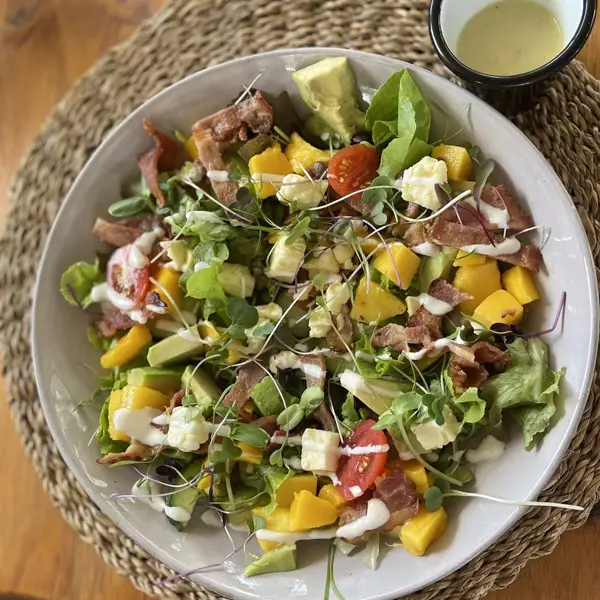
Delicious salad selections at Wilde Eend in Windhoek.
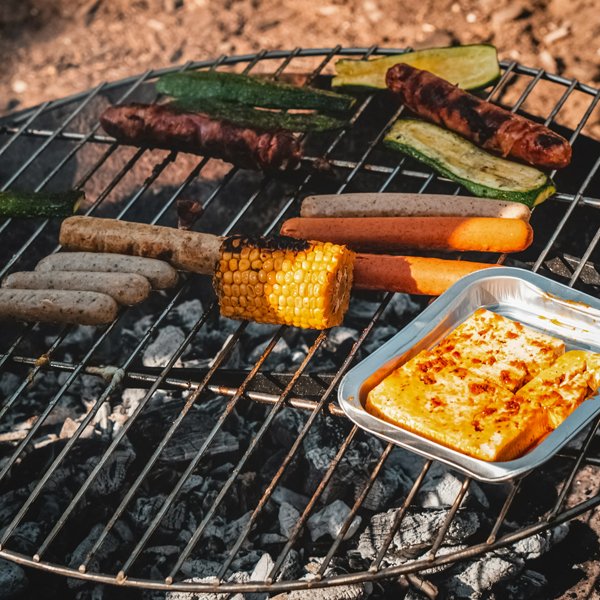
Braais can cater for both meat-eaters and vegetarians.
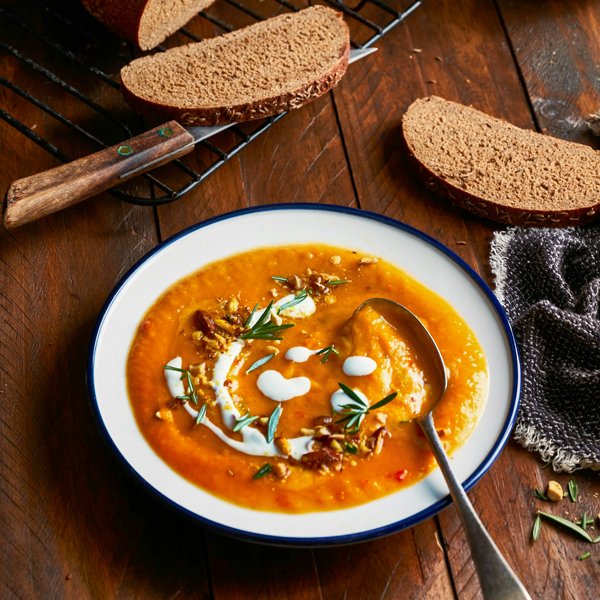
Butternut soup is a staple at many lodges. Great for winter nights.
What do you eat on a camping safari?
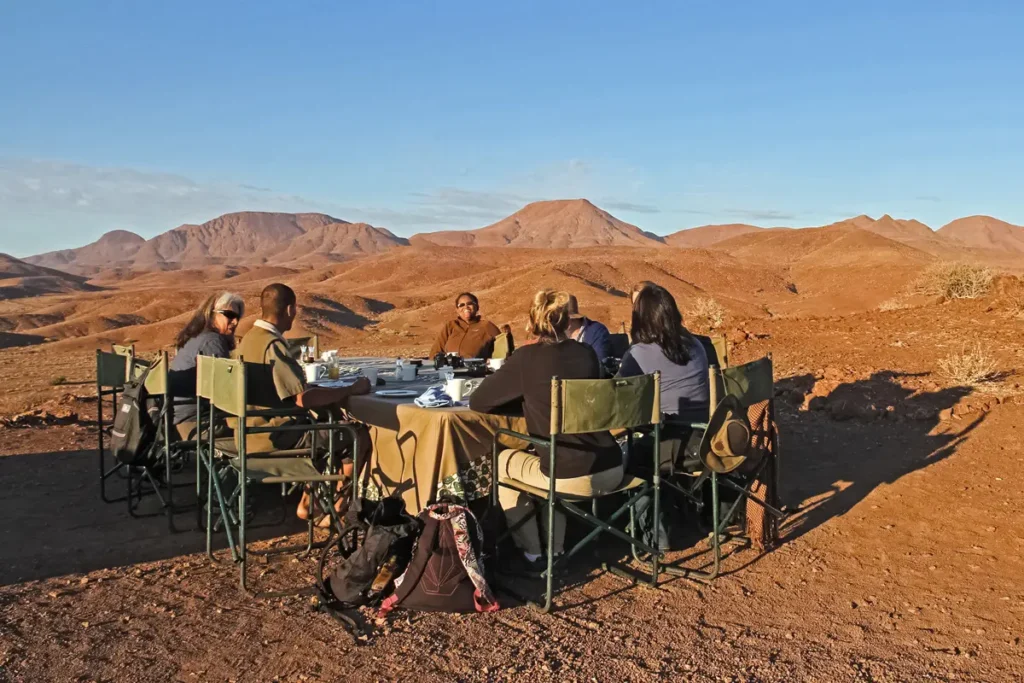
Camping safari food is usually considerably better than people expect. A good safari crew can produce remarkably varied meals from a travelling kitchen, often using an open fire as much as a conventional stove.
Breakfast might include eggs, bacon or sausage, cereal, yoghurt, fruit, toast, tea and coffee. On early-start days it may be simpler (rusks are a traditional staple but do require dunking in a beverage), with everyone eating before heading out for a game drive or a long day’s journey.
Lunch is normally practical: sandwiches, salads, cold meats, cheese or an easily prepared meal at camp or a roadside picnic stop.
Dinner is where a Namibia camping safari really comes into its own. Meat may be grilled over the coals, while stews and potjiekos cook slowly in cast-iron pots. Pasta, potatoes, rice, vegetables and salads provide variety throughout the trip.
There is something particularly satisfying about arriving at camp after a day exploring Etosha National Park, Damaraland or the Namib, lighting the fire and settling down with a drink while dinner cooks.
The meal is only part of the experience.
Eating at Namibia’s safari lodges
At Namibia’s lodges, meals range from generous home-style cooking to sophisticated multi-course dinners.
Breakfasts tend to be substantial, lunch lighter, and dinner is often the main event. Depending on the lodge, this might be a buffet, braai or set menu incorporating local ingredients and game meat alongside more familiar international dishes.
One of the impressive things about Namibia’s better lodge kitchens is the quality and variety they manage to produce despite operating a long way from major suppliers.
Namibian foods worth trying
You don’t need a culinary checklist, but there are a few foods worth looking out for during your trip.
Kapana is freshly grilled meat cut into small pieces and eaten hot. Biltong and droëwors are dried meats and almost perfect road-trip snacks, while boerewors is a seasoned sausage commonly cooked over the braai.
Oryx and kudu are among the game meats most frequently encountered at safari lodges, and are very similar to beef in flavour. Potjiekos is a slow-cooked stew in a cast-iron pot over coals and is particularly well suited to camp cooking if you have the time.
In northern Namibia, mahangu, or pearl millet, is an important staple. Well adapted to dry conditions, it is commonly prepared as a porridge and eaten with meat, vegetables or sauces.
Together these foods demonstrate just how varied Namibian cuisine can be, with the country’s different regions, communities and histories all influencing what people eat.
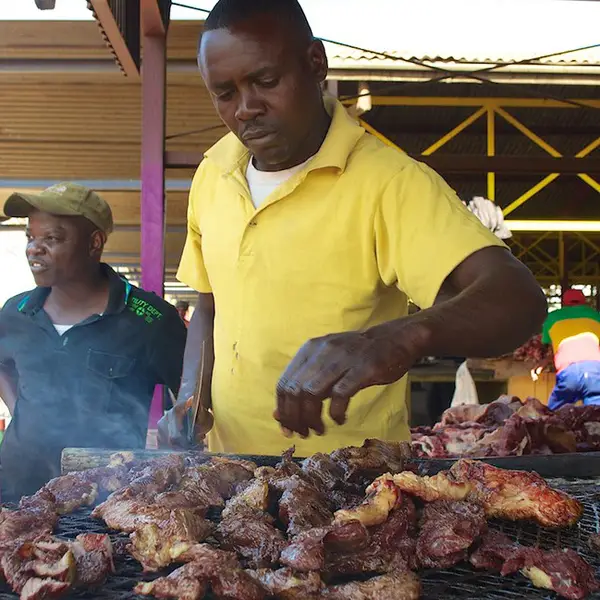
Kapana is a street food consisting of grilled meat cooked over an open fire.
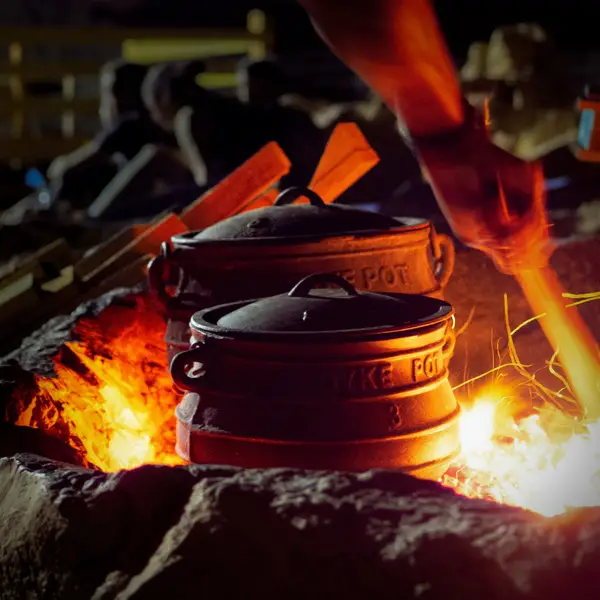
Potjies on the fire.
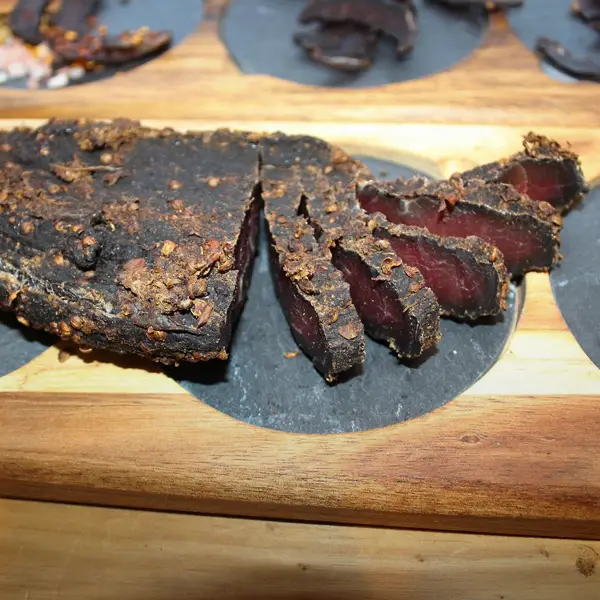
Biltong – the perfect padkos (road snack). At least most Namibians think so!
Vegetarians, vegans and dietary requirements
Vegetarian travellers should generally have little difficulty in Namibia, particularly if accommodation and safari operators know their requirements beforehand.
Vegan diets and specialist dietary requirements require a little more planning. Remote lodges cannot always obtain substitute products at short notice, and on camping safaris several days’ food may be purchased before the vehicle leaves town.
The same applies to allergies, intolerances and strict gluten-free diets. Tell us when you arrange your Namibia safari, rather than waiting until you arrive. This gives camps and lodges time to plan suitable alternatives.
Food on a self-drive holiday
If you’re taking a self-drive holiday in Namibia, food requires some forward planning – particularly if you’re camping.
Windhoek and larger towns such as Swakopmund, Otjiwarongo and Keetmanshoop are good places to stock up. Smaller settlements may only have basic shops, and the selection of fresh produce can be limited or non-existent.
Don’t assume that the next dot on the map will have a large supermarket. If you’re heading into a remote region, buy what you need beforehand and carry sufficient drinking water. A fridge or good coolbox is also extremely useful for campers.
Food is part of the Namibian experience
Some of your most memorable meals in Namibia may come from an excellent lodge kitchen. Another might be freshseafood beside the Atlantic or kapana eaten in Windhoek. But it could equally be something cooked over glowing coals at a campsite, eaten beneath a spectacular Namibian night sky after a dusty day on the road.
Namibia’s food reflects the country: its arid climate, farming traditions, enormous distances and diverse communities. Rather than expecting the same ingredients everywhere you travel, embrace those differences.